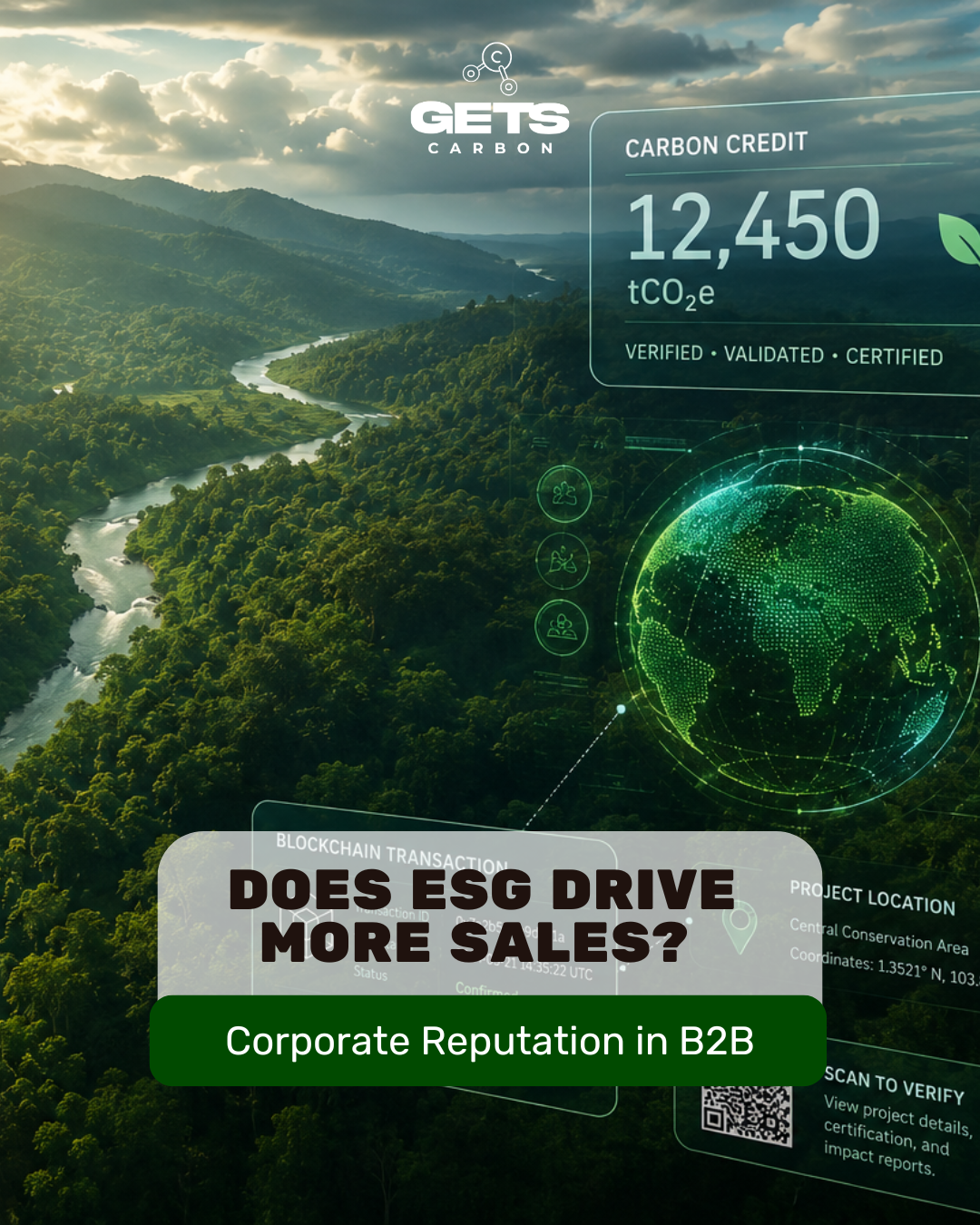
For years, ESG was primarily viewed as a branding, compliance, or investor relations initiative. However, a quiet transformation is taking place across the B2B landscape: companies are losing contracts—or failing to reach the final stages of negotiations—because they cannot demonstrate measurable sustainability performance.
The question is no longer whether investing in ESG is worthwhile. In many industries, the real question is: how much revenue is your company losing because it cannot prove its ESG commitments?
In today’s corporate environment, reputation is no longer a subjective concept. Large organizations increasingly incorporate environmental, social, and governance requirements into supplier qualification processes, private tenders, and contract renewals. As a result, even companies offering superior pricing or technical expertise may lose opportunities if they cannot demonstrate environmental governance, traceability, or impact-reduction goals.
One of the least discussed realities is that ESG has become a commercial screening mechanism. In private procurement processes, industrial supply chains, multinational corporations, and major purchasing organizations, questionnaires regarding emissions, sustainability metrics, carbon offsetting, and environmental compliance have become standard. Companies that cannot provide clear answers often face early elimination from the process.
In addition, corporate buyers are passing their own regulatory and sustainability pressures down to suppliers. Organizations with public ESG commitments, net-zero targets, or participation in the carbon market increasingly prioritize partners that align with those objectives. The reason is simple: reputational risk extends across the entire supply chain.
However, there is an important distinction to make: talking about ESG does not create a competitive advantage. Measuring ESG does.
Organizations that can provide concrete data—such as emissions inventories, environmental performance indicators, carbon offsetting initiatives, and sustainability reporting—build stronger credibility during negotiations. ESG moves beyond corporate messaging and becomes operational evidence. In many cases, this reduces objections, strengthens proposals, and accelerates internal approval processes within client organizations.
This is where many businesses begin searching for practical environmental management solutions. Companies seeking access to certified credit carbon programs, emissions reduction initiatives, and transparent sustainability strategies are increasingly looking for measurable ways to strengthen their environmental performance.
GETS Carbon helps organizations transform sustainability into a measurable business asset through certified credit carbon solutions, carbon footprint management, and environmental compensation strategies. Operating in both the regulated and voluntary carbon market, the company connects businesses with certified environmental projects in Brazil and internationally while ensuring transparency and traceability throughout the process.
Another factor that receives little attention is the role ESG plays in reducing commercial risk. Consider a company competing for an international contract where environmental documentation is required during the due diligence phase. Organizations with structured sustainability indicators can respond quickly and confidently. Those that rely on last-minute preparations often create uncertainty—and uncertainty reduces contract conversion rates.
This explains why sustainability has evolved beyond corporate reputation and now directly influences revenue, profitability, and commercial predictability. Companies are no longer simply appearing more responsible; they are becoming more competitive.
Businesses that pursue a strategy focused on becoming carbon neutral in business often gain additional advantages. Demonstrating a commitment to emissions reduction and compensation can strengthen trust among customers, investors, and strategic partners while supporting long-term growth objectives.
If your organization still views ESG solely as a marketing initiative or regulatory obligation, it may be approaching the issue from the wrong angle. The challenge is not only protecting brand image. It is gaining a competitive edge in contracts that are increasingly awarded based on sustainability criteria.
To understand how sustainability can become a measurable business differentiator—including emissions compensation, participation in the carbon market, access to certified credit carbon solutions, and strategies for becoming carbon neutral in business—it is worth exploring the solutions offered by GETS Carbon. A well-structured environmental strategy can strengthen corporate reputation, reduce commercial risk, and create new opportunities for business growth.