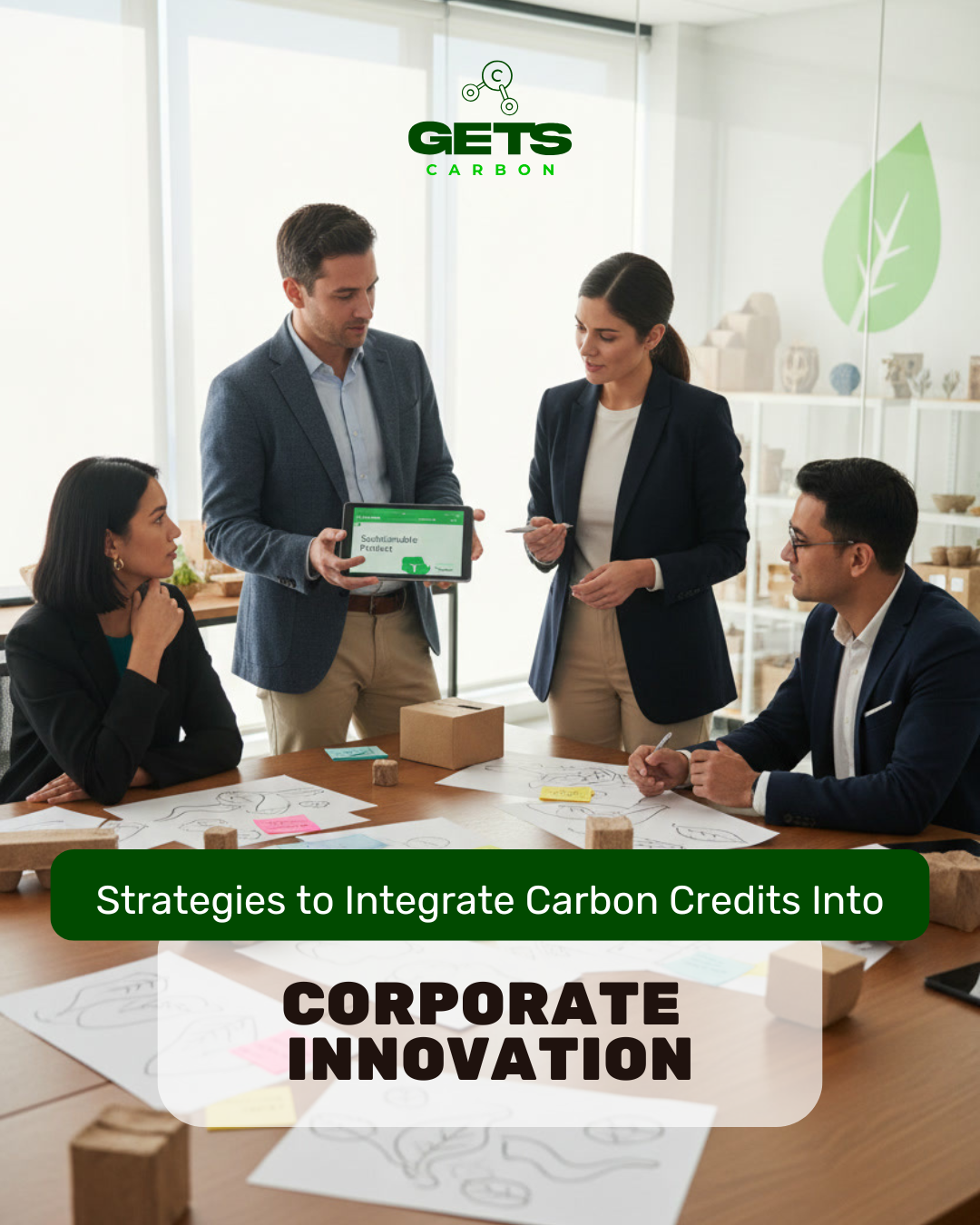
Integrating carbon credits into an innovation strategy requires coordinated actions that unite climate goals with new business development. In the evolving carbon market, companies that strategically combine technology, sustainability, and financial intelligence unlock major competitive advantages. For organizations seeking to become truly carbon neutral in business and to go beyond traditional compensation, understanding how to innovate with credit carbon is essential. Below are advanced practices that help move beyond superficial offsetting and truly innovate through carbon.
Incorporate carbon metrics into R&D processes: Establish emission-reduction targets as performance criteria for new products and projects. From the design phase onward, challenge teams to think with a low-carbon mindset. This drives sustainability-focused creativity and may lead to projects eligible for the generation of certified credits. Companies that successfully measure and reduce emissions gain operational efficiency and can also create financial assets by certifying reductions as tradable credits. In other words, a well-executed innovation project can simultaneously reduce energy costs and generate additional revenue from credit sales.
Adopt internal carbon pricing: Set an internal price for CO₂ emissions within your operations. This works as a “climate toll” for internal decision-making—projects with higher emissions carry a financial penalty, while low-carbon initiatives become more attractive. Leading companies already apply this technique to stimulate innovative ideas. For example, a global tech company has applied an internal carbon fee since 2012 to fund a climate-innovation portfolio. With this structure, the company invests in energy efficiency, purchases high-quality carbon credits for hard-to-abate emissions, and supports carbon-removal startups. The result is twofold: tangible emission reductions and the development of promising technologies under its own umbrella. Internal carbon pricing aligns the entire organization with climate challenges, engaging multiple departments in the search for creative solutions.
Innovate within your value chain (insetting): Instead of only purchasing credits from external projects, consider developing reduction or removal initiatives within your supply chain. This practice—known as insetting—may involve partnerships with suppliers, customers, or local communities. For example, a food company can support partner farmers in adopting regenerative techniques that capture carbon in soil, generating certifiable credits. The company then secures more sustainable raw materials while accounting for the credits toward its climate goals (or even selling them in the voluntary market). Unlike traditional offsetting, insetting promotes business-model innovation and strengthens value-chain relationships while delivering direct environmental benefits tied to the company’s core activities.
Monetize and reinvest in innovation: Turn climate goals into business opportunities. If your company surpasses reduction targets and generates surplus carbon credits, consider selling them strategically. Carbon-credit sales can become a new revenue stream, proving that sustainability and profitability can advance together. Brazilian companies are already recognizing this potential—buyers, generators, and intermediaries are gaining prominence in the fast-growing climate-solutions ecosystem. When generating revenue through credits, allocate part of these resources to a virtuous cycle of reinvestment into sustainable R&D—funding clean-energy projects, carbon-capture technologies, or other green innovations. Each successful initiative strengthens the budget for future projects, accelerating the journey toward low-carbon leadership.
Is your company ready to take the next step and transform sustainability into profitable innovation? Now is the time to act. Take advantage of the momentum in the market, the available incentives, and the enthusiasm of purpose-driven teams to reposition your company within the low-carbon economy. At GETS Carbon, we can support your journey. With deep expertise in carbon projects and sustainable innovation, we help organizations build tailored strategies, identify opportunities to purchase high-quality carbon credits, and develop projects for the generation and sale of credits in Brazil and abroad.
Contact us today and discover how to elevate your climate-innovation strategy to the next level. Let’s go beyond compensation—toward sustainable leadership in your sector.