The pressure for global environmental compliance has never been greater. Companies that operate in international supply chains have already realized that environmental audits are no longer occasional events. They have become permanent validation criteria. The problem is that many organizations still operate with a reactive mindset, adjusting processes only when required, and that can jeopardize contracts, reputation, and growth.
International audits do not assess only whether your company “follows rules.” They examine consistency, traceability, real impact, and above all, the ability to prove all of it with auditable data. This is where the biggest gaps usually appear: lack of control over emissions, absence of clear indicators, and difficulty proving environmental actions in a structured way.
Prepared companies work with a different logic. They understand that sustainability is not only about reducing impact, but about strategic management based on data. This includes measuring the carbon footprint accurately, structuring mitigation plans, and ensuring that every action has technical support and verifiable evidence. Without that, any international audit becomes a risk.
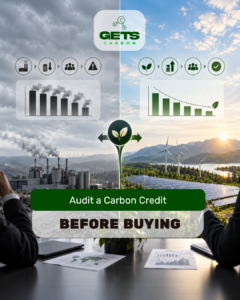
Another decisive factor is the credibility of the solutions adopted. It is not enough to declare environmental compensation. It is necessary to prove that it is real, certified, and globally recognized. This is where credit carbon takes center stage. When used properly, it allows companies to neutralize emissions reliably while also strengthening their position in audits and with stakeholders.
Gets Carbon operates exactly at this critical stage of the process. The company connects organizations to certified carbon credits from environmental projects with measurable impact, such as reforestation and clean energy. This ensures that compensation is not merely symbolic, but validated by internationally recognized standards, which is an essential requirement in more rigorous audits.
In addition, Gets Carbon works with a data-driven approach built on transparency and traceability, allowing every acquired credit carbon to have a verified origin. In a scenario where audits demand concrete evidence, this traceability is no longer a differentiator. It becomes a necessity.
Another strategic point is the company’s global presence in both regulated and voluntary segments of the carbon market. This means your company can adapt to different international requirements with greater flexibility, without compromising compliance. For organizations that export or want to expand, this capability is decisive.
More than offsetting emissions, the proper structuring of a carbon strategy helps your company meet regulatory requirements, avoid penalties, and strengthen its corporate image. In audits, this translates into greater security, clearer processes, and more consistent reporting.
The reality is simple: companies that treat sustainability as a strategy go through audits with confidence. Those that treat it as an obligation tend to rush after last-minute adjustments, and that rarely works under international standards.
If your company still does not have a clear view of its environmental readiness, this is the time to act strategically. Gets Carbon can support your journey with secure, traceable solutions aligned with global requirements, turning carbon management into a competitive asset.
Contact Gets Carbon and discover how to prepare your company for international environmental audits with consistency, credibility, and a forward-looking vision.