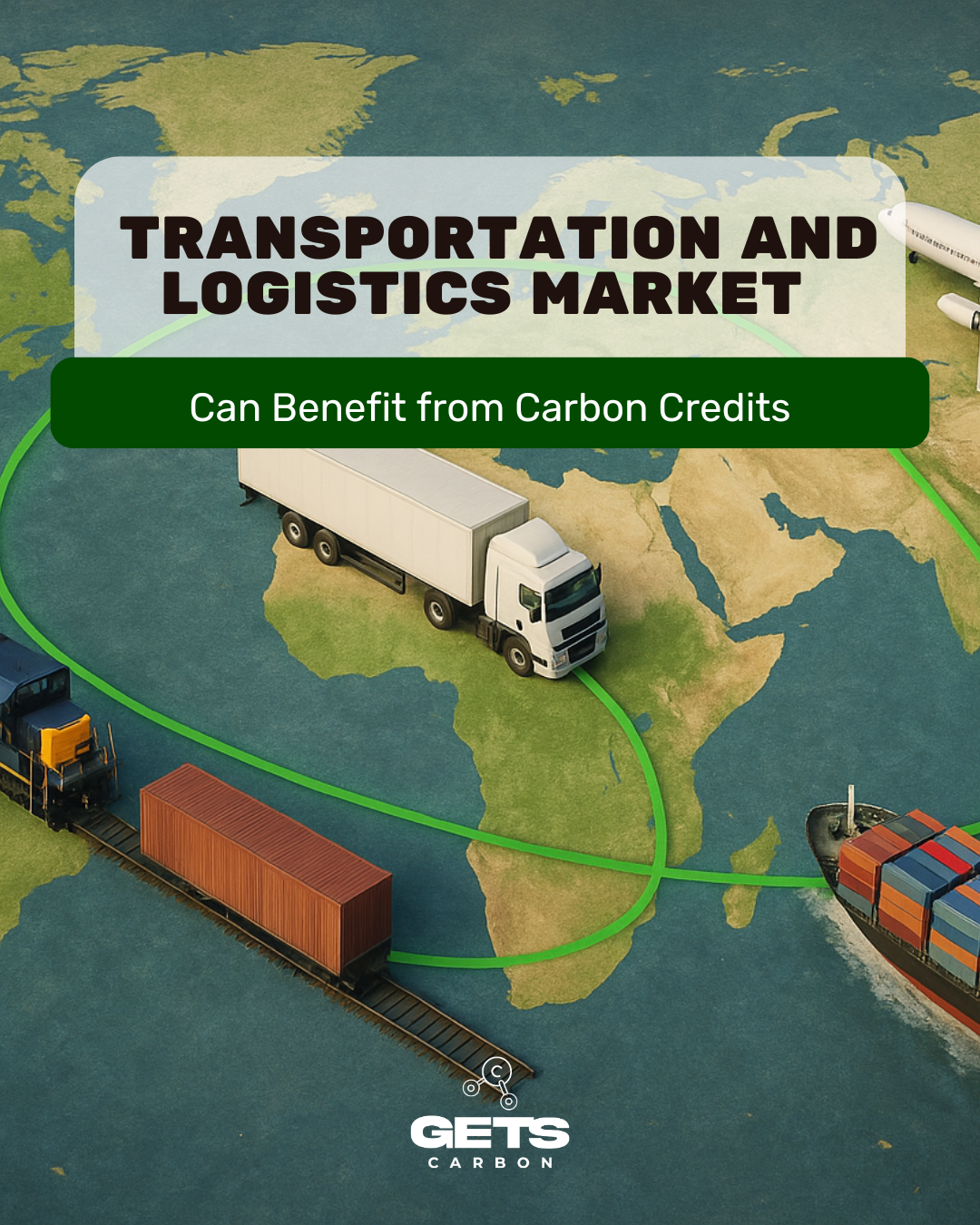
In a world of increasingly ambitious climate goals, the transportation and logistics sector stands on the frontlines of decarbonization. Around 24% of all global CO₂ emissions come from transportation, making trucks, ships, trains, and airplanes the unintended protagonists of global warming. In Brazil, the challenge is even more pronounced: in 2023 alone, the transport sector was responsible for approximately 217 million tons of CO₂ equivalent — more than half (50.7%) of the country’s total energy-related emissions. These figures highlight an undeniable reality for logistics companies: reducing and offsetting emissions is no longer optional. Corporate clients demand greener supply chains, investors push for concrete ESG actions, and regulators are preparing to turn carbon into a cost. In this context, carbon credits emerge as one of the most strategic tools for the transportation industry to navigate the transition toward a low-carbon economy.
The Transportation Sector Under Climate and Regulatory Pressure
The climate emergency has placed freight transportation under intense scrutiny. While other sectors can replace fossil fuels with cleaner alternatives relatively quickly, trucks and ships still rely heavily on diesel and fuel oil. Brazil’s road fleet, for example, runs mostly on diesel — a fuel whose consumption increased by nearly 60% between 1990 and 2005 (repositorio.mcti.gov.br), underscoring the country’s dependence on high-emission energy sources. The result is clear: transport-related emissions continue to rise, growing faster than those of any other sector. This trend directly conflicts with the Paris Agreement’s targets and with the commitments made by major shippers to reduce their carbon footprints.
At the same time, regulatory pressure is intensifying. Brazil is moving forward in establishing its carbon market — the Brazilian Emissions Reduction Market (MBRE) — which may adopt a cap-and-trade system to limit sectoral emissions. Bill 2148/2015 (now PL 182/2024), already approved by the Chamber of Deputies and under Senate review, proposes exactly that: setting emission caps and pricing CO₂ that exceeds the allowed threshold (logisticag2l.com.br). In other words, in the near future, carriers that fail to reduce their environmental impact may have to pay for every excess ton of CO₂ emitted — while those that innovate and pollute less could sell carbon credits, turning emission reductions into revenue. This upcoming regulatory reality adds a tangible financial component to sustainability: it’s no longer just about branding or environmental awareness, but about competitive advantage and compliance. Getting ahead of these requirements can help companies avoid fines, fees, and even trade restrictions — preparing them for a business landscape where neutralized carbon is worth its weight in gold.
Carbon Credits: Turning Pollution into Value
Amid this challenging landscape, where do carbon credits fit in? In simple terms, carbon credits are certified units backed by real reductions in greenhouse gas emissions. When an environmental project (such as a solar farm, reforestation area, or methane capture system) prevents or removes one ton of CO₂ from the atmosphere, it can generate one carbon credit equivalent to that avoided ton. These credits become tradable assets: companies that exceed their emission limits can purchase carbon credits from those who have surplus or from climate project developers, balancing their CO₂ accounts. Conversely, organizations that reduce beyond their targets — whether through energy efficiency, biofuel use, or logistics optimization — can sell carbon credits, monetizing their sustainability efforts in the marketplace.
Practically speaking, this system works as a smart flexibility mechanism. Instead of halting operations to immediately reach zero emissions — often a technological impossibility — a company can invest in external compensatory reductions while gradually implementing internal improvements. Offsetting does not replace direct reduction at the source but addresses residual impacts immediately, channeling resources into green initiatives. This accelerates the transition: while fleets are not yet fully electrified and biodiesel adoption remains uneven, companies can still achieve climate neutrality by investing in existing solutions across other sectors.
This compensation system is scaling rapidly worldwide. Airlines, for instance, now allow passengers to neutralize their flight emissions through carbon-neutral programs for businesses that invest in renewable energy or reforestation projects. In freight transportation, it’s no different: logistics operators and e-commerce giants are already offsetting their shipping emissions by purchasing carbon credits linked to sustainable projects around the world. In other words, carbon credits turn pollution into value — each shipment becomes not only a source of emissions but also a driver of environmental investment, supporting climate initiatives and adding sustainable value to the services delivered.